

What is meant by a contractual company
With the term contract, in the field of furniture, we refer to two different business systems: the first concerns the supply of furniture intended for large real estate developments, public or private. The second concerns so-called “turnkey” supplies in which the furniture company acts as a contractor and fully executes the project on behalf of the client, from coverings to furniture, from finishes to installations.
The contractual activity involves the setup and furnishing of entire residential, commercial, and public structures, which share the complexity and scope of the project: the interiors of a hotel, the common areas of a cruise ship, the decor of a yacht, or the housing solutions of a villa or residential complex.
Features of the business company
It is a complex service company, in a market where reputation, reliability, and the accuracy of pricing strategies are fundamental elements in the client’s decision-making process.
Project management, from order to delivery
“Project management” first refers to understanding the client’s needs, developing the project with the architectural firm, monitoring the construction site, choosing the right suppliers, meeting economic requirements, and, if necessary, reviewing costs and prices (“Value Engineering”), taking care of logistics.
The culture of the business relationship
In a context composed of many actors with different interests and objectives, it becomes important the culture of the business relationship based on the concept of “pressing the buyer against the risks of purchase.” To ensure that clients are as free as possible from liability risks, a meticulous and detailed definition of every detail is required. This allows for a very high guarantee and makes specifications a powerful tool for successfully completing the project. In this context, the design aspect becomes predominant over the executive aspect.
The role of design
Design is very important, it can affect 6 to 8% of the final cost and is responsible for 75% of the assumed costs; any error in design can lead to increased costs down the line. Therefore, budget control is crucial.
Insourcing and/or outsourcing
Another important feature, aside from the dynamism of the company, is flexibility. A specialized production structure is an element of rigidity, with fixed costs and inflexible production facilities, creating rigidity. That is why the contractual company does not produce but outsources.
Technical capabilities — management
Finally, and especially in contractual business, specific skills and technical management skills are needed, and more specifically:
- organized and controlled vendor management;
- flexibility and willingness to deal with last-minute changes and unforeseen alterations;
- proper management of internal and external resources to successfully complete the order within the set deadlines;
- the financial structure necessary for contract execution;
- specific contractual marketing to attract specialized operators (general contractors, architectural firms, interior contractors).
The context in which contractual business companies operate
Learn more about the environment to propose a solution
Pads in the pipeline to map the area to be defined. It follows:
- particular and/or irregular shapes, which are designed for the first time and must be able to adapt to specific requirements that emerge from the reliefs, for example, the passage of implants.
- many different materials and thus also the need to establish documents and control orders for external suppliers (detailed lists of requirements);
- large projects: with thousands of elements and pieces that must be coded, documented, produced, with as few errors as possible.
Client engagement
When producing a job, it is the client who defines the technical specifications of the product, either directly or through trusted general contractors or architects. The economic impact of the project at various stages of the contract gives the client strong decision-making power, with which comparisons and adjustments are almost constantly ongoing.
Delivery time
Contractual furniture requires speed in design, production, and setup. This is for three reasons:
- speed is competitive and is one of the key factors that gives you an edge in the market;
- each day of delay corresponds to heavy penalties.
- any delay directly erodes your company’s margins, margins that in recent years, especially after the crisis, have already been thinned out.
Cost control in work management
The absence of a correct budgeting method or the calculation of profit margins of combined contractual contracts, combined with a thick quote made “a span” proves to be a double-edged sword.
To this, it is added that often, in companies where production is both serial and on order, the profit from serial production can be eroded by “loss-making” contractual production: without the company realizing it!
An information system suitable for managing data and information
A clerk for contractual furnishing is a receptacle of information. The sources are clients, architects, project managers, up to the actual project data (measurements, dimensions, weights…) that must be effectively detected. All information and data should be shared with the departments and individuals involved in the process and contributing to the final outcome. Time wasted searching for information, asking for clarifications and explanations, recreating documents that may already exist in the file, is one of the main costs for a contractual furniture company.
4 tips for optimal management of contractual orders

From the clerk’s qualification to the order
Many companies underestimate the crucial moment that will lead to the production of the components required by the contract. This is the stage of commercial negotiation where the anxiety to “bring the order home” leads to underestimating a whole range of risks and opportunities.
The start of a contractual job begins with the “request and contact.” It is the result of an attraction marketing activity, based on spreading skills towards market objectives.
The third stage is the “project of the project,” obtained from the client’s request for proposal. This is where the maximum and/or detailed specifications, including design checklists, are established.
In the fourth phase “business plan,” a feasibility plan for the project is developed with costs, expected deadlines, involved suppliers, internal and external human resources, and analysis of potential risks.
The fifth phase “call for tenders” allows for the formulation of the offer. The offer will have various releases and the continuation of negotiations aimed at acquiring the contract.
Management of the workshop clerk in the technical department
Once the contract is acquired, the management of the contract begins with final design and engineering. Design affects between 6% and 8% of the construction cost, but about 75% of the costs of the entire job depend on this stage: this is when value is created.
The project manager and the technical service play an important role in the optimal management of employment information. It is true that the information comes from the client, but it is the technical service that transposes this information and transforms it into documents (files) to be shared among the parties. Born the 3D project, the information stabilizes and becomes available; moreover, with the appropriate CAD tools and software, the project information can become the executive documentation.
Production inside/outside, logistics, and on-site installation
The technical department is at the heart of employment management, constantly exchanging incoming and outgoing data with all other business departments.
The goal is to complete the work as quickly as possible, with a quality product, without errors, and optimizing margins. To achieve this, the company must work in perfect coordination and harmony. If the company is organized “in silos” (business areas with watertight compartments), it will be necessary to reorganize value processes, coordinating business departments into a single flow of information and materials.
An ambitious goal, which is achieved through timely analysis of your company’s production and information flows.
Good organization of contractual operational processes
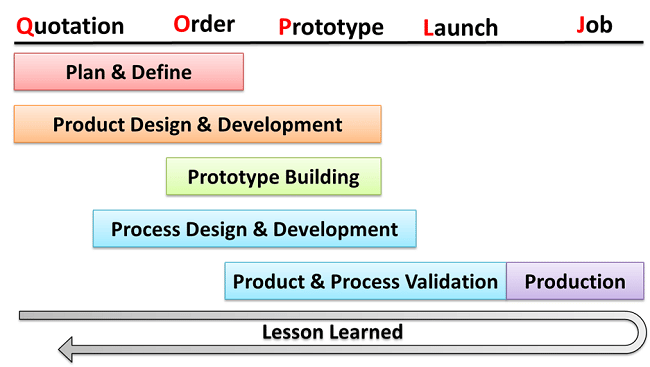
The context of contractual activity is filled with particularities in terms of products and processes. The organization needs new operational aspects and to accelerate operations, it is advisable to rely on specialized consulting.
The operational processes of the contractual company need:
- a strategic approach (which market segments to address, which operators to collaborate with, etc.),
- the acquisition of specific know-how in key value processes (contractual marketing, project management, site management, etc.),
- the adoption of management and design software.
A poorly organized company with inappropriate tools to deal with unforeseen events within the set time will be expelled from the competitive arena over time.
Tag : business management software