
A leather jacket, worn and reworn, eventually tells its story through its scent. Even if hung for days at the window, it can stubbornly retain the memory of the body that inhabited it. And the worst mistake would be to think that a simple wash or a strong detergent would solve the problem. Leather, after all, forgives nothing.
Why do leather jackets retain sweat odors?
The leather jacket is as intriguing as it is fascinating. We love it for its style, but this noble material inherits, over time, a persistent olfactory memory. Derived from the tanning of animal skin, leather remains a living material that absorbs odors, especially the acidic ones from sweat.
Unlike synthetic textiles, leather breathes, yes, but it allows moisture to pass through and captures odor molecules. Its pores and roughness trap everything: body odors, humidity, smoke remnants. And the jacket lining, often in direct contact with the skin, quickly becomes a breeding ground for humidity where odors settle. When sweat seeps in, it leaves behind mineral salts and organic compounds responsible for that famous leather smell that mingles with the scent of the body.
Maintenance also plays a key role. Rushing to dry it on a radiator, forgetting to air out the jacket, wearing it in a humid environment: all these actions worsen the situation. On the Rêves de Déco website, this vicious cycle and ways to escape it are detailed.
In summary, here are the main factors involved:
- Natural leather material: open pores, easy absorption of odors.
- Humidity: makes odors even more persistent.
- Lining: direct contact area, amplified effect.
The result: leather retains and prolongs sweat odors much longer than an ordinary fabric garment.
What methods should be prioritized to effectively eliminate bad odors without damaging the leather?
The first reflex: airing. Hang the leather jacket on a hanger in a dry, well-ventilated room, away from any heat source. Slip newspaper inside the sleeves and body: it will absorb moisture and persistent odors, whether from sweat or smoke.
For more stubborn odors, baking soda works wonders. Sprinkle it on the lining, let it sit overnight, then gently remove it with a soft brush or a dry cloth. Baking soda neutralizes the molecules responsible for bad odors without damaging the material. If necessary, diluted white vinegar (half water, half vinegar) can clean the lining: dab with a slightly damp cloth, without soaking the leather.
Here are other alternatives to try depending on the situation:
- Lemon juice: a few drops on the lining to freshen it up without harming the leather.
- Talc: sprinkled and left for a few hours, it absorbs sebum and odors.
- Specific textile spray or essential oils (lavender, tea tree): two or three sprays inside are enough to bring a fresh note and mask persistent odors.
After each treatment, remember to nourish the leather with a suitable balm to preserve its suppleness and shine. Sommières clay remains very effective against greasy stains, safe for the material. For the lining, a mixture of baking soda and talc allows for deep deodorizing cleaning, gently.
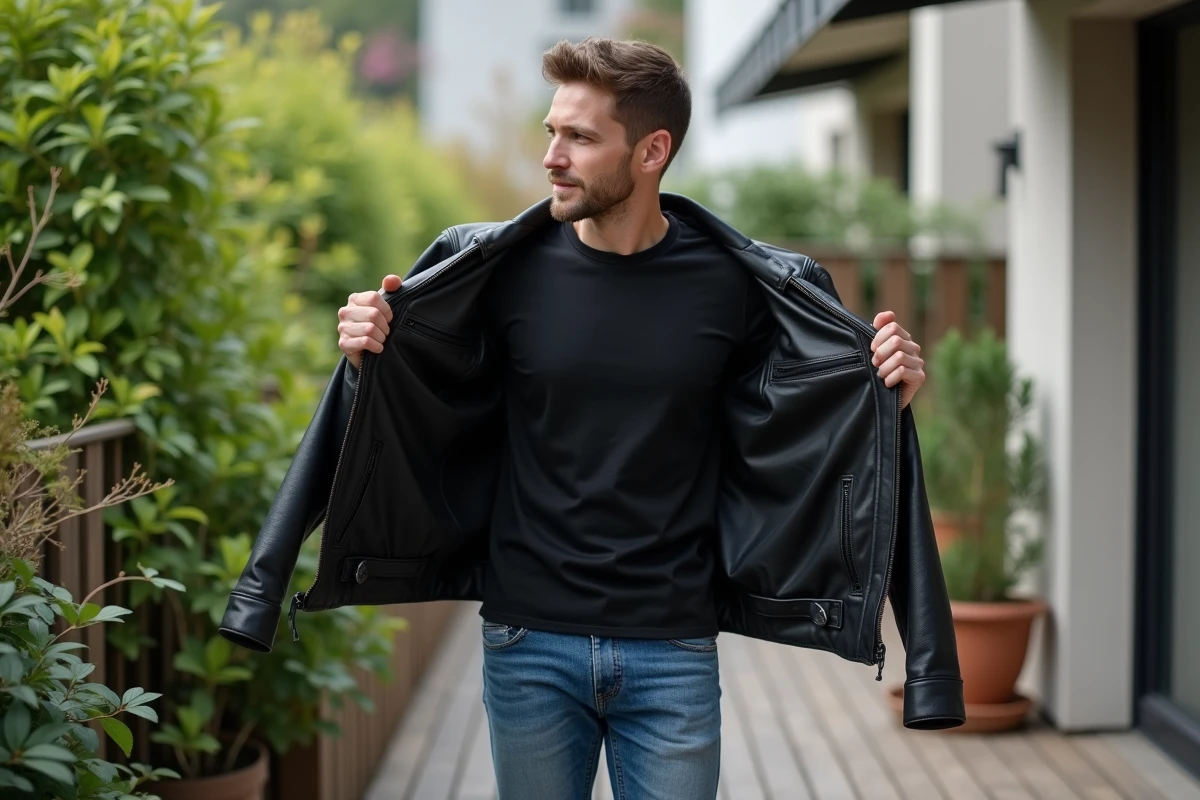
Practical tips for sustainably maintaining a leather jacket and preventing odors
The leather jacket is demanding: no water, no strong heat, no excessive humidity. Keep it away from radiators, direct sunlight, and poorly ventilated rooms. This living material quickly weakens under the effects of daily life. A simple hanger, in a temperate place, is enough to avoid deformation and let the jacket breathe. Leather fears prolonged exposure to light or heat, which alters its color and accentuates the fixation of odors.
Maintenance involves simple actions: regularly clean the surface with a cleaning milk or a delicate cream, then apply a leather conditioner to nourish the material and protect it. A water-repellent treatment forms a barrier against moisture and stains. Absolutely avoid washing machines, ironing, or blow-drying: these methods deform and dry out the leather until it becomes brittle.
To keep the lining fresh, prefer dry cleaning or a gentle application of baking soda or talc, to be removed later with a soft brush. Be careful in choosing products: faux leather, for example, requires soapy water, while genuine leather prefers specific care.
Regularly hydrate, air out after each wear, and treat stains and odors immediately. This consistency in maintenance ensures that your jacket retains beauty, suppleness, and olfactory neutrality, season after season. A well-maintained leather never betrays its wearer: it retains its elegance and forgets the scent of the past.