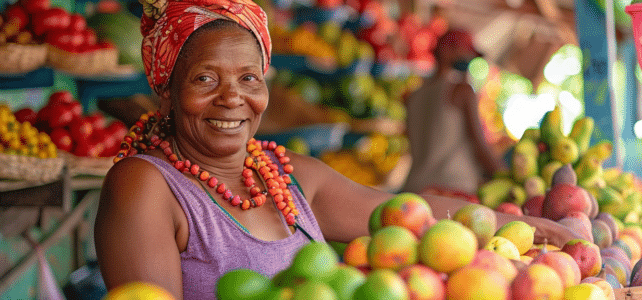
Creole, a vibrant and expressive language, is a linguistic patchwork born from the meeting of diverse cultures during European colonization. Its roots delve into a mix of African, European, Indigenous, and even Asian influences, giving rise to a mosaic of dialects with local colors. The expressiveness of Creole is reflected in a rich vocabulary and a constantly renewed lexical inventiveness. Creole expressions paint everyday life with verve, alternating between sweetness and spiciness, reflecting the social and cultural reality of the islands where they have germinated. Each word carries within it a world of emotions and stories.
The origins of Creole vocabulary: a cultural and linguistic blend
The Creole language is anchored in a complex past where the history of the colonies and the trajectories of uprooted peoples intertwine. Armand Corre, a naval doctor and learned figure in anthropology in the 19th century, dedicated a significant part of his work to the study of this language. His perception of Creole society, although tinged with the prejudices of his time, helped shed light on the cultural and linguistic intricacies that shaped Creole. The African origin of many Creole words underscores the profound influence of displaced populations during the slavery period. Terms from this origin fully contribute to the semantic richness and emotional coloring of the language.
Faced with external views, the Creole language has often been reduced to devaluing stereotypes, considered the language of “big children” by an era marked by racism. This reductive vision obscures the depth and subtlety of this language. Creole insults, for example, although biting, demonstrate a capacity to use the language with remarkable finesse and impact, reflecting the social and emotional nuances of life in the Caribbean and in Haiti.
In understanding this language, the role of anthropology is central. Armand Corre used this discipline to observe and analyze Creole society, attempting to decipher the codes and linguistic usages. While his perspective was shaped by his time, marked by a paternalistic view, his writings remain an important source for grasping the evolution of the perception of Creole. From the language of the other, marginalized and despised, Creole has become a legitimate subject of study, a singular voice in the concert of cultures.
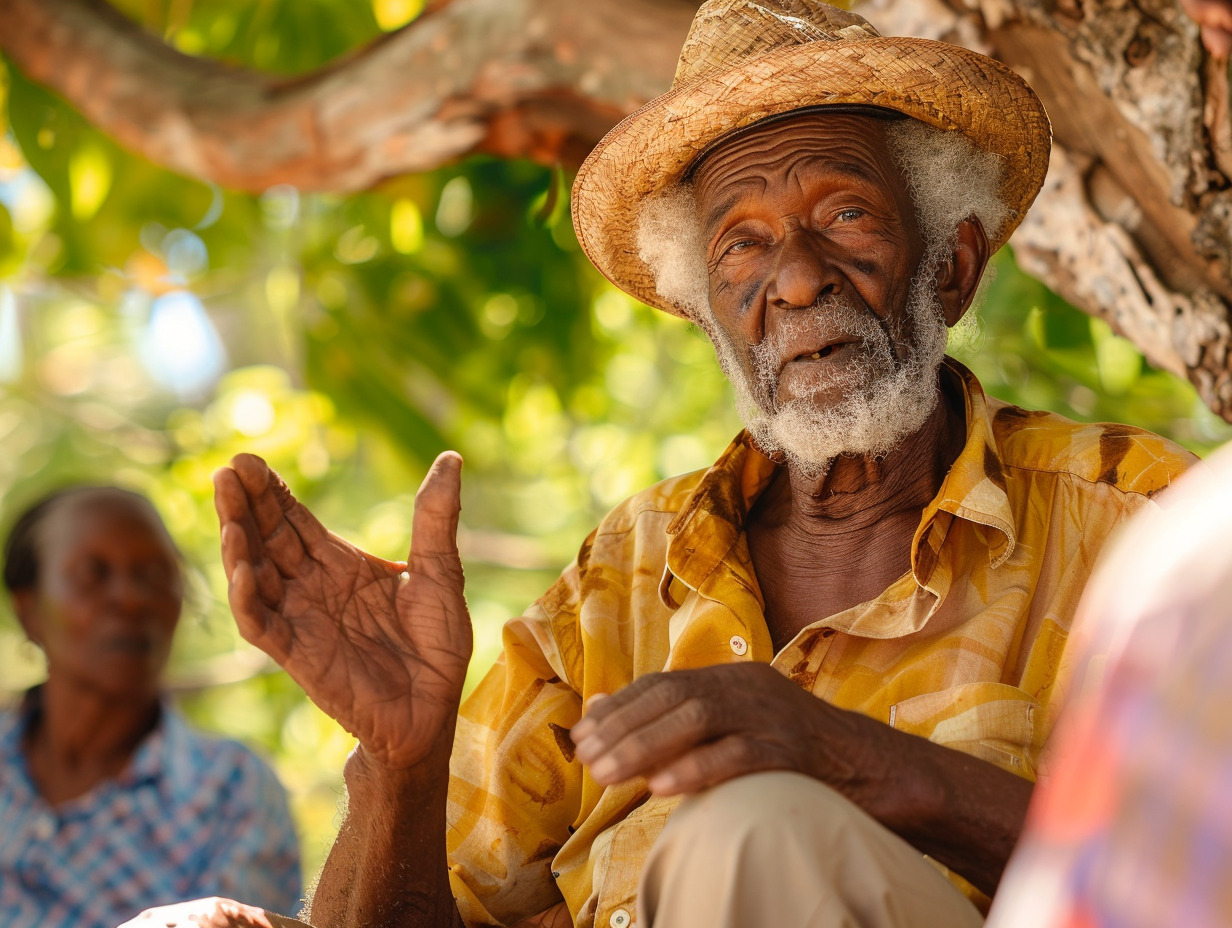
The pearls of Creole: emblematic expressions and words
The Creole vocabulary, in its richness and diversity, offers a true linguistic festival where poetry holds a prominent place. The language is adorned with colorful expressions and sharp words, reflecting a culture where the verb knows how to both charm and sting. Axiological inversions are frequent, contributing to a change of value where what, in other contexts, might be pejorative or banal acquires a new dimension here, often tinged with humor and sagacity.
The exotic imagination, often associated with Creole women and mulattoes, permeates the Creole lexicon. The words are imbued with a sensuality and warmth that evoke the sweetness of tropical climates and the fusion of cultures. In this context, the terms echo a complex history, between mixing and resilience, where each word carries within it the layers of African, European, and Indigenous influences.
The Creole language also stands out for its ability to transform the everyday into a repertoire of living fables, where reality unfolds in life lessons tinged with a mischievousness unique to this language. The work of Jean de La Fontaine finds a particular echo in the Creole oral tradition, where his fables are transposed, reinvented, and enriched by local flavor. Animality takes on a unique twist, with beasts becoming the spokespersons of a human society with multiple facets.
Consider the Creole French, a hybrid language where classical French is creolized in a process of adaptation and transformation. This interaction produces a vibrant language, where the old and the new, the local and the universal coexist. In this blending, Creole words are not mere borrowings; they constitute a reappropriation, an affirmation of identity, and above all, a celebration of linguistic diversity.