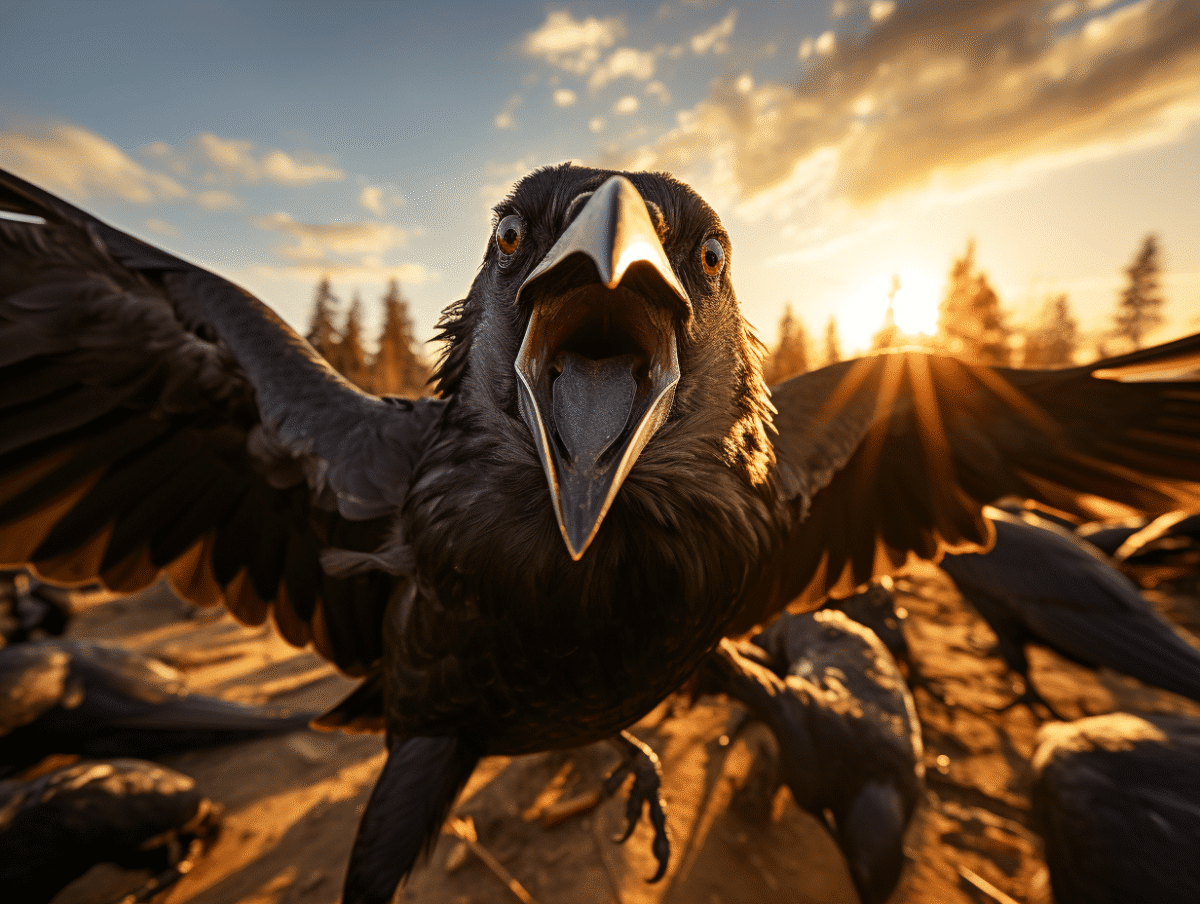
Crows, often perceived as mere black birds with mysterious behavior, are actually creatures endowed with remarkable intelligence and a complex social life. These birds have the ability to make tools, recognize human faces, and communicate with each other in sophisticated ways. Their social organization is based on hierarchies and alliances that can evolve over time. Interactions within their communities reveal behaviors that challenge preconceived notions, inviting a more nuanced reflection on the cognitive abilities of these fascinating animals.
Crows in Society: Behavior and Social Interaction
A recent study led by Chloé Laubu, a doctor in animal behavior biology, focused on the social structure of the carrion crow, a bird of the order Passeriformes and family Corvidae. The carrion crow, scientifically named Corvus corone, exhibits a social organization characterized by its sedentary nature, primarily living in pairs or small family groups. These groups are often rooted in defined territories, where each member plays a specific role.
In these communities, crows display remarkable cognitive abilities. They demonstrate an aptitude for solving complex problems, using tools, and maintaining elaborate social relationships. The birds, through daily interactions, establish bonds of cooperation and competition that maintain the balance and cohesion of the group. These behaviors are the result of an evolution that has favored individuals capable of acting within a structured collective.
The female crow, just like her male counterpart, actively participates in these group dynamics. Their interactions are not limited to the breeding season but extend throughout the year, suggesting a continuity in maintaining social ties. The birds maintain long-term relationships, with some alliances lasting a lifetime.
Research on carrion crows raises questions about comparing their intelligence with that of other corvid species, and even beyond, to non-human mammals with high social intelligence. The work of Chloé Laubu and her colleagues, published in the scientific journal Animal Behaviour, highlights the social behaviors of these birds and invites a reevaluation of the place of corvids in the hierarchy of animal intelligence.
Ecology and Lifestyle of Crows: Habitat, Diet, and Reproduction
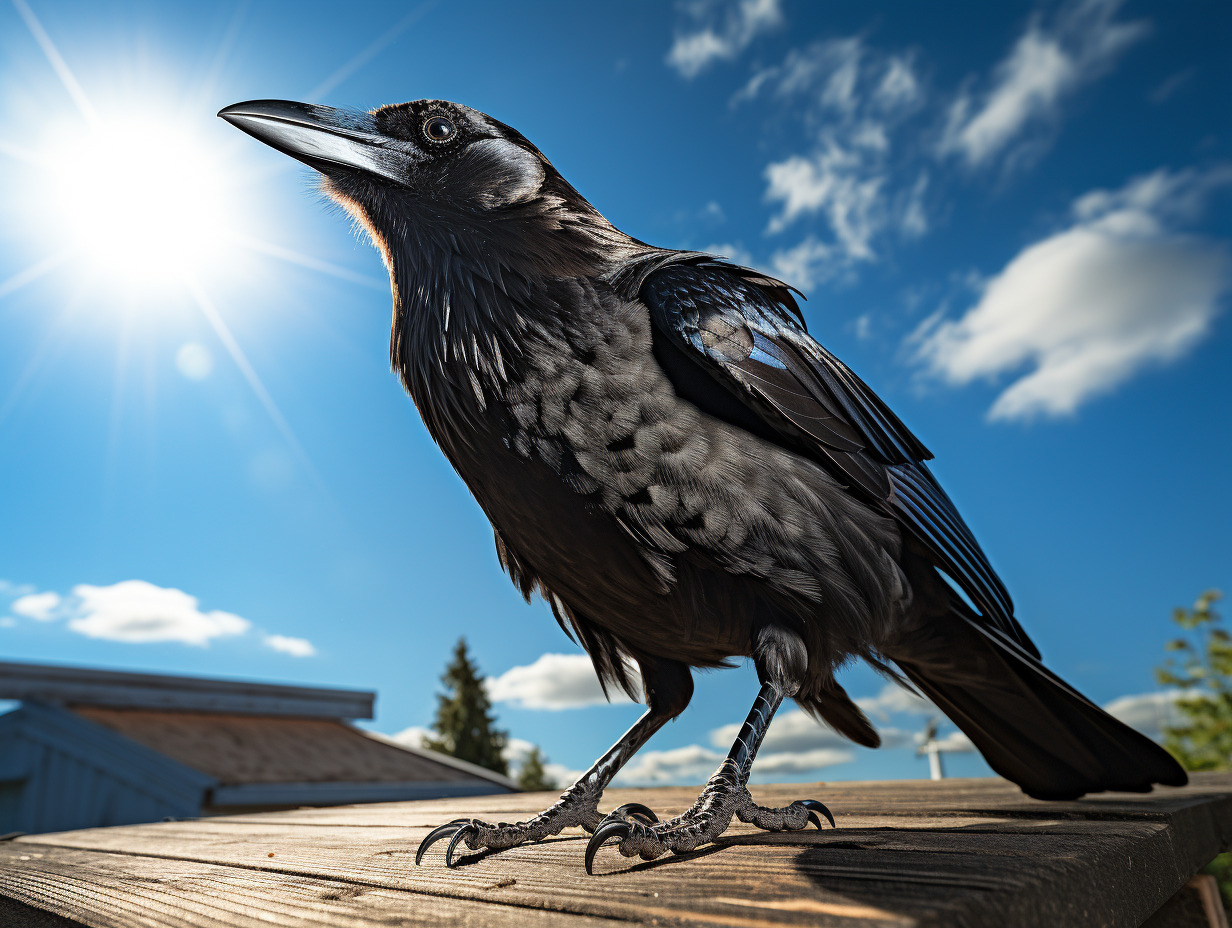
The carrion crow, which originates from the order Passeriformes and family Corvidae, lives in a variety of habitats. Preferring open environments to coastal areas, parks, and gardens, this bird adapts remarkably well to its surroundings. The flying entity, scientifically named Corvus corone, serves as an enlightening example of animal adaptability.
The omnivorous diet of the carrion crow ranges from small animal prey to fruits and waste, demonstrating an ability to adjust based on available resources. This dietary opportunism is an evolutionary advantage, allowing the species to thrive in varied ecosystems. The omnivorous nature of its diet illustrates the diversity of its survival strategies.
Regarding reproduction, the carrion crow invests significantly in building its nest, where it lays eggs once a year during the breeding season. The nests, often located in trees at protected heights, are the result of joint effort between partners, reflecting close collaboration within the couple.
The longevity of the species, estimated at around 18 to 20 years in the wild, is accompanied by an IUCN classification as a species of least concern, indicating a stable population. The resilience of the carrion crow fits within the framework of balanced management of its ecosystem, highlighting the importance of habitat conservation for the sustainability of species.