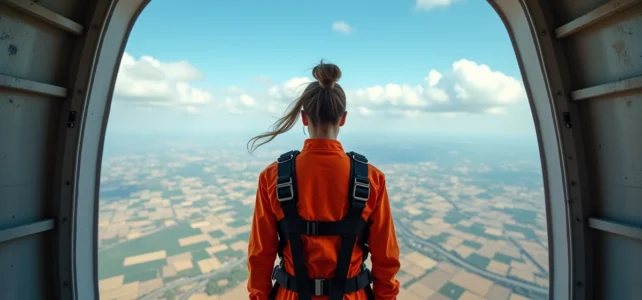
Jumping from an airplane at several thousand meters of altitude engages the body in a particular way. The calorie expenditure burned during a parachute jump depends less on the free fall itself than on everything surrounding it: the stress, the waiting on the dropzone, wearing the gear, and the repeated movements. Understanding where these calories actually come from helps to position skydiving in relation to other physical activities.
What heart rate monitors really record on a dropzone
Have you ever looked at the activity summary on a smartwatch after a day outdoors? The displayed data often surprises. Instructors equipped with heart rate monitors and multi-sensor GPS (Garmin, Polar, Suunto) have observed a recurring phenomenon: the free fall of 40 to 60 seconds represents only a minor fraction of the total caloric expenditure recorded throughout the day.
The majority of the energy expended comes from the time spent on the ground. Waiting for hours, walking between the hangar and the boarding area, wearing a harness and a parachute that weigh several kilograms, folding the canopy after landing: these actions accumulated over a full day weigh much more heavily in the energy balance than the minute of free fall.
Stress also plays a measurable role. Before each jump, the heart rate rises significantly above the resting rate, sometimes as soon as the ascent in the airplane begins. This adrenaline spike increases metabolism for several minutes. For a skydiver doing four or five jumps in a day, these repeated spikes add up and inflate the total displayed by the sensor.
A detailed article on calories burned during a parachute jump confirms that the energy balance far exceeds what a single minute of flight might suggest.

Tandem skydiving or PAC training: the caloric expenditure is not the same
Not all skydivers expend the same energy. The passenger in a tandem jump remains almost passive for the majority of the jump. The instructor manages the exit from the airplane, stabilization in free fall, and piloting the canopy. The passenger adopts an arched position and keeps their arms spread, which engages a few muscle groups, but without prolonged effort.
In PAC training (progressive accompanied fall), the situation changes radically. The student performs repeated efforts throughout the day:
- Autonomous carrying of complete gear between each jump, with equipment that weighs significantly more than that of the tandem passenger
- Ground technique sessions, repetition of exit positions and safety maneuvers, which engage the legs and torso
- Active management of the canopy after opening, with continuous pulls on the braking and steering controls
- Frequent movements on the dropzone between the landing point, folding area, and the airplane
PAC training students expend significantly more calories than tandem passengers, according to feedback from centers that equip their students with heart rate monitors. Several Anglo-Saxon schools have integrated this difference in effort profile into their safety briefings, particularly to adapt hydration and nutrition recommendations.
Skydiving day versus hiking or running: comparison over time
Comparing a single jump to a sports session doesn’t make much sense. The right unit of comparison is the full day. Why? Because a skydiver who arrives at the dropzone at 8 AM and leaves in the late afternoon spends between six and eight hours in intermittent activity.
What the sensor really measures over a day
During this time, the body alternates between phases of relative rest (sitting wait, briefing) and peaks of effort (carrying loads, pre-jump stress, canopy management). This intermittent pattern resembles more of a trekking day with variable elevation than a regular run.
A six-hour hike at a moderate pace produces significant caloric expenditure because the effort is continuous. A one-hour running session, even if sustained, compresses the expenditure into a short time frame. The skydiving day falls between the two: the total effort is spread out, punctuated by breaks, but heightened by physiological responses to stress.
The stress factor makes the difference
Hiking and running do not provoke an adrenaline spike comparable to that of a jump. Adrenaline increases heart rate and metabolism well beyond what muscular effort alone would justify. A hiker whose pulse hovers around 110 beats per minute on a flat trail does not reach the peaks that a skydiver records in the airplane before exit.
This hormonal component explains why smartwatches sometimes display high caloric balances for an activity where pure muscular effort time remains limited. The body burns energy to manage stress, regulate temperature at altitude, and maintain a prolonged state of alertness.
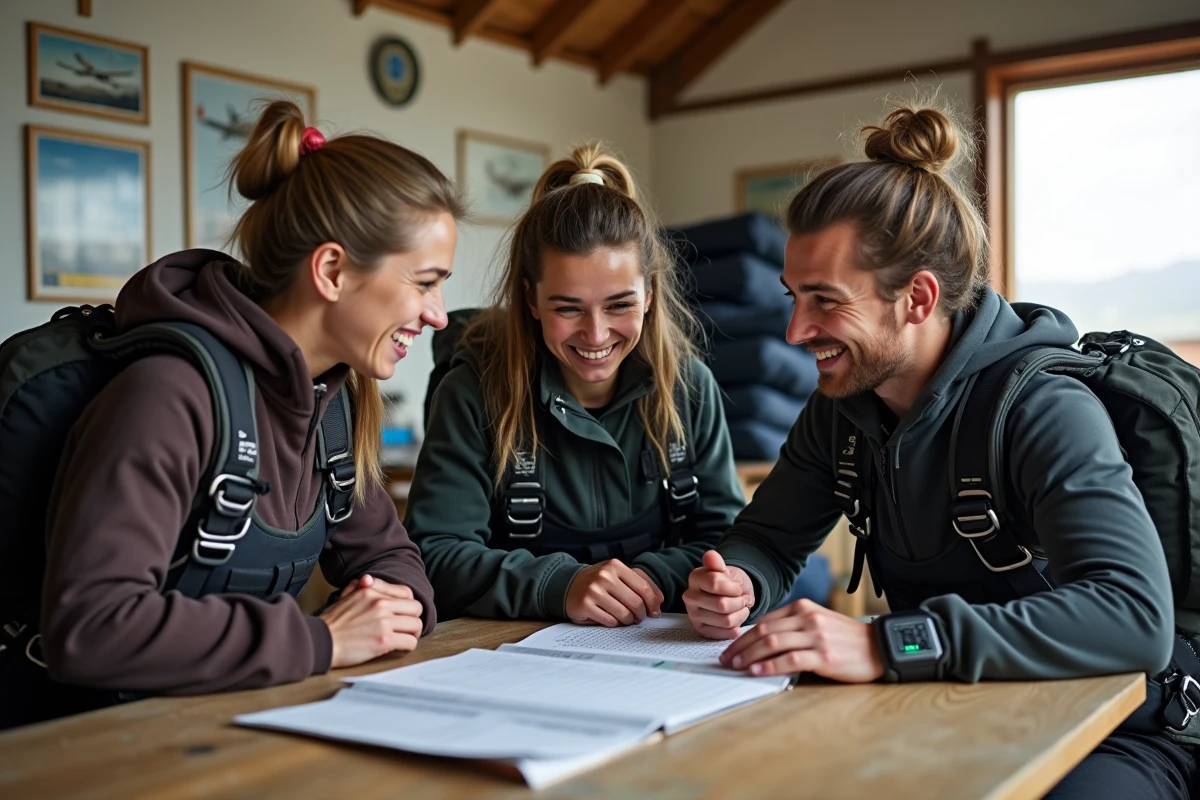
Calories and skydiving: what to remember for your first experience
For someone preparing for their first initiation, the question of energy expenditure has a direct practical interest. A day of jumping tires the body, even if one is not running or lifting weights.
- Plan for suitable meals and regular hydration throughout the day, especially in summer when the heat on the ground adds to the stress
- Do not arrive on an empty stomach or after a heavy meal: gastric stress amplifies fatigue
- Anticipate muscle fatigue in the upper back and shoulders, related to wearing the harness and the arched position in free fall
- Expect nervous fatigue at the end of the day, proportional to the number of consecutive jumps
Skydiving is not an endurance sport, but a day of jumping challenges the body as much as a long outing in the mountains. The expenditure does not come from continuous effort; it results from the accumulation of stress, movements, and physical constraints related to the gear. Whether one is a tandem passenger during a first experience or a student in PAC technique, adapting one’s nutrition and hydration to this reality remains the most useful reflex to have.