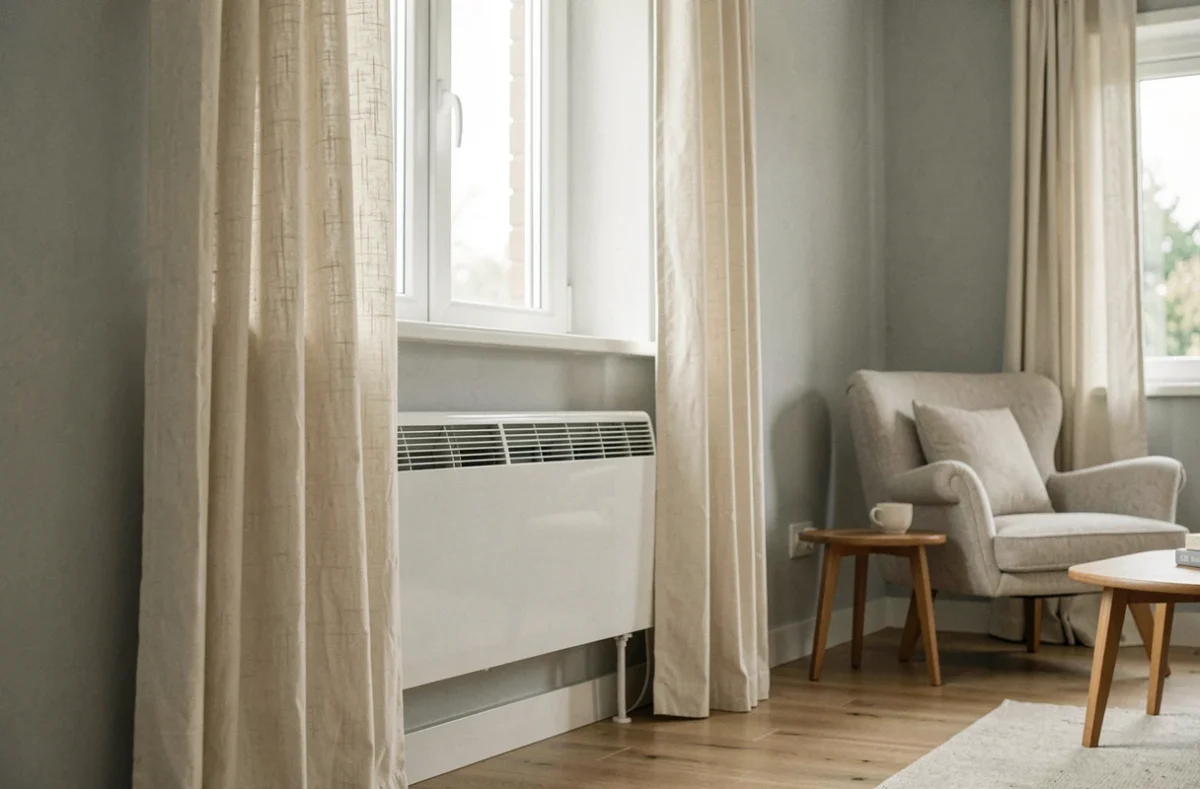
There is no universal safety distance between a curtain and an electric radiator. The required clearance depends on the model, how it distributes heat (convection, radiant heat, or thermal inertia), and the position of the thermostat sensor. Only the manufacturer’s instructions provide reliable guidance, as confirmed by recommendations from the Savoie Fire and Rescue Service (SDIS) and the French National Consumer Institute.
Sensor position and curtains: the key factor to check
A curtain hanging in front of a radiator does more than interfere with heat distribution. It can distort the thermostat sensor’s readings by trapping a pocket of warm air between the fabric and the appliance. The thermostat then detects a higher temperature than the one actually felt in the room, switches the heating off too soon, and triggers short cycles that increase energy consumption without improving comfort.
On thermal inertia radiators, the sensor is often located near the bottom. A curtain that reaches the floor creates a bell effect, trapping heat around the sensor. On a radiant panel heater, the sensor built into the front is less affected by the curtain, but the heating surface has less reach if the fabric absorbs infrared radiation.
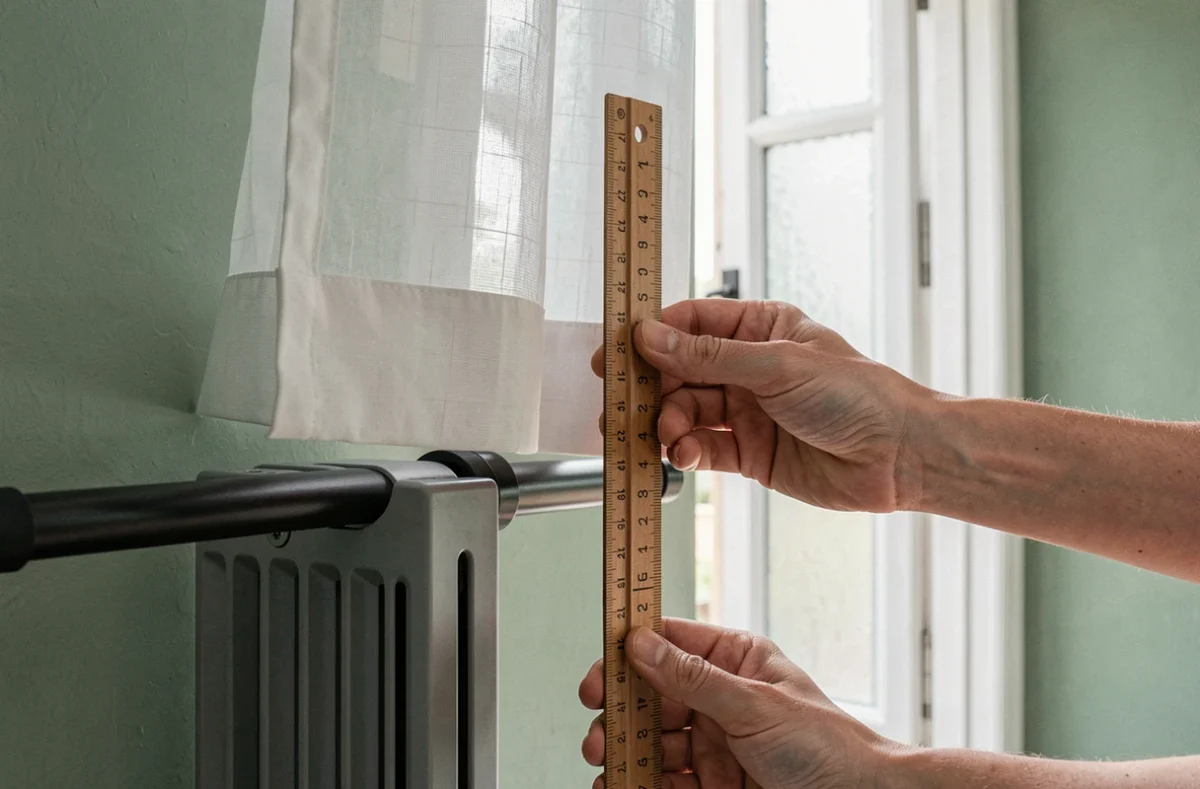
Before choosing a curtain length, we recommend locating the sensor on the appliance (check the instructions or look for a pictogram on the casing). Its position, more than the radiator’s height, determines the minimum clearance to maintain.
Several tips for hanging a curtain above an electric radiator are based on this principle: tailor the fabric to the appliance’s actual shape rather than following a generic rule.
Thermal curtains in front of a window or blocking a radiator: two different things
Thermal curtains are becoming increasingly popular for reducing heat loss through windows. Their purpose is to create an insulating layer of air between the window and the room. This insulation only works if the curtain stays on the window side, without covering the radiator beneath the window.
In a small room, the window is often directly above the radiator, so the curtain naturally hangs in front of the appliance. There are three typical setups:
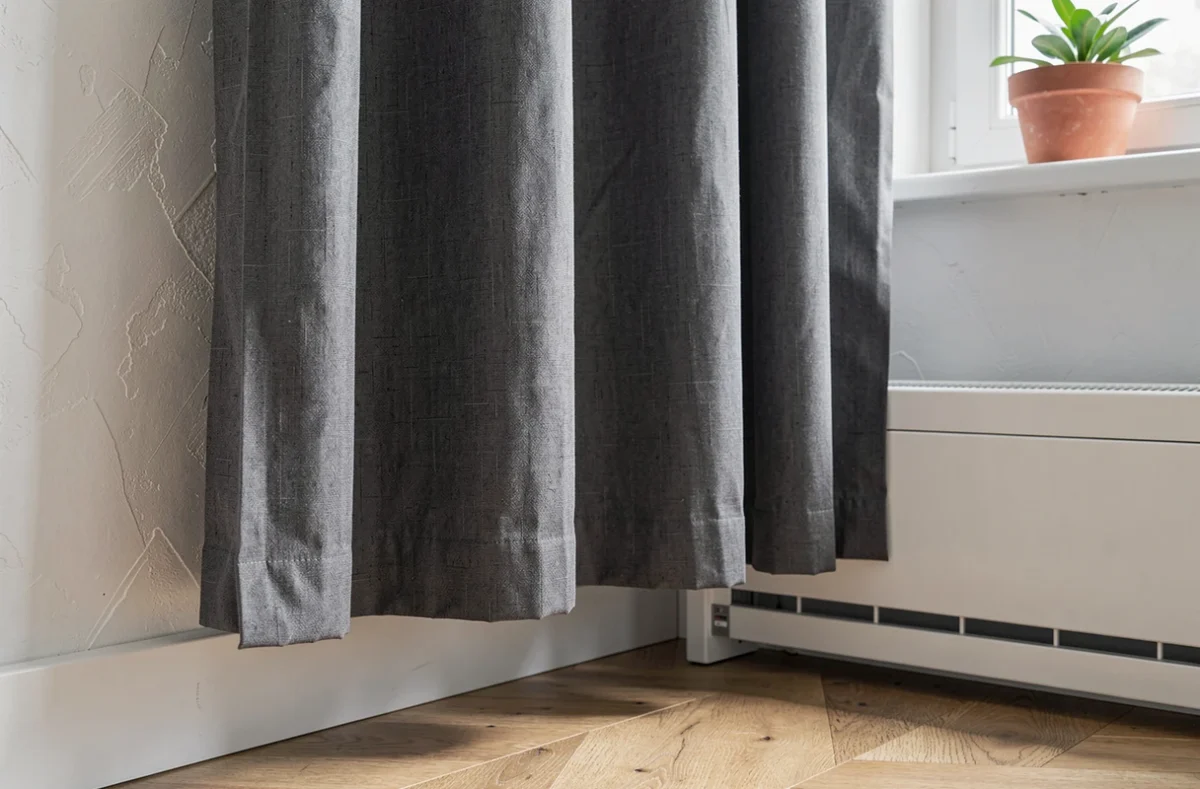
- The curtain stops above the radiator (at the height specified in the instructions): the window is only partially insulated, but warm air can circulate freely and the sensor can measure the temperature accurately.
- The curtain hangs in front of the radiator down to the floor: the window is better insulated at night, but warm air gets trapped behind the fabric, distorts the temperature control, and reduces the appliance’s effective output.
- The curtain hangs between the window and the radiator (with the curtain rod set closer to the window): this works when there is enough space, as the fabric insulates the window without interfering with the flow of heat.
The third option requires enough clearance between the window wall and the radiator, which is not always available in older homes with shallow window recesses.
Fabric and fittings: technical factors often overlooked
Curtain material directly affects both the risk and performance. A thin synthetic sheer lets more radiant heat through than a thick blackout fabric, but it can melt or warp at lower temperatures. The surface of a domestic electric radiator never gets hot enough to ignite fabric, but prolonged contact with a clogged convector or a faulty appliance can cause the fabric to deform.
Look for fabrics that combine two properties: enough heat resistance to withstand contact with high-temperature air without degrading, and enough permeability to let warm air circulate into the room.
Adjustable fittings and curtain length
An adjustable-height curtain rod or side tiebacks make it possible to pull the curtain back when the radiator is on. This simple manual solution works well in rooms where the window and radiator are too close together for a satisfactory fixed setup.
Pulling the curtain back at the sides clears the path for convective airflow while preserving its decorative function. Magnetic tiebacks attached to the wall on either side of the window recess hold the fabric back without requiring additional drilling.
Portable space heaters: separate rules that should not be confused
The guidance for fixed wall-mounted radiators does not apply to portable space heaters. The INC and the Savoie Fire and Rescue Service (SDIS) stress that these appliances must be kept well away from all combustible materials, must never be covered, and must be used in strict accordance with their instructions. A curtain brushing against a fan heater on the floor poses a much greater fire risk than one near a wall-mounted radiant panel.
Never apply the clearances for a fixed radiator to a portable heater. If a space heater is temporarily used beneath a window with a long curtain, the curtain must be pulled fully back or the heater moved.
Practical solutions for small rooms
In a small bedroom or office, the best compromise depends on three factors: where the curtain ends, where the curtain rod sits in relation to the wall, and the type of radiator installed.
- Thermal inertia radiator with a low-mounted sensor: stop the curtain at least at the height specified in the instructions, or move the rod closer to the window if the recess allows.
- Radiant panel heater: the curtain can hang a little lower without distorting the sensor reading, but it reduces the reach of the radiant heat in the room.
- Conventional convector: the upward airflow is most easily blocked, so a curtain in front of the appliance significantly reduces its effectiveness.
Always make your decision with the manufacturer’s instructions to hand. A well-positioned curtain helps block the cold radiating from the window without interfering with the radiator. Poorly positioned, it disrupts temperature control, increases energy bills, and creates a risk that most home décor guides underestimate.