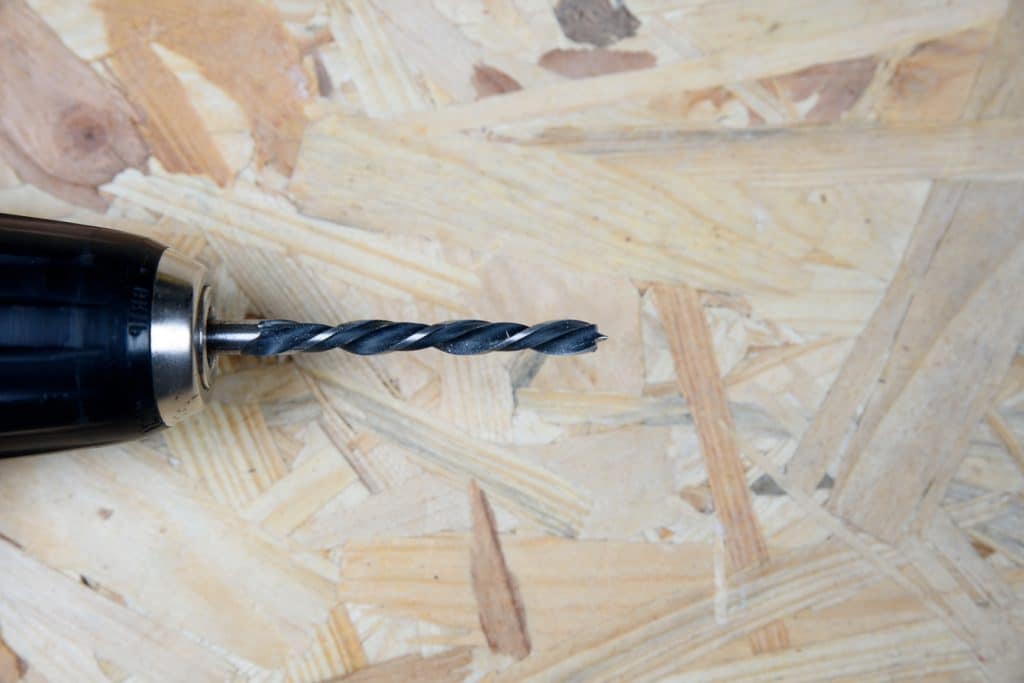
Thanks to the high availability of DIY equipment, this activity is becoming less and less an esoteric concept. That said, understanding the complexity of DIY is not so obvious, without even learning a minimum about the accessories. In this case, when choosing your drill, it is essential to know which bit which drill should be chosen for your work? and for what job. To find out what drill you need, follow our guide. Find on our site the best value for money on the market: the SCID brand.
Know the different types of bits
In general, bits are chosen based on their shapes, which correspond to a particular drilling characteristic. In addition to size (diameter), two other parameters are carefully studied to distinguish the ideal bit.
The body of the drill
This is the upper part of the drill consisting of a bit and the cutting part. A drill is primarily distinguished by this component. Knowing that there are a multitude of uses, considering the material to be drilled, the size and depth of the hole, or the type of drilling, the drill is also available in a bed pattern.
- Spiral bits
Often referred to as a “universal drill,” this is probably the most common type of bit due to its shape. Its bit has a spiral fluted profile that is more or less steep, from standard at 20° to fast at 40°. The tip can have an angle of 118° or flat up to 135° to limit slipping. Spiral heads can also be enhanced with one or three points, with one centered and two lower peripheral points.
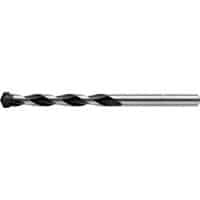 Pro SCID Concrete Bit 75 mm Length 4 mm Diameter
 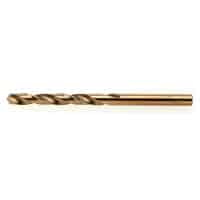 HSS Cobalt Steel Bit SCID Length 65 mm Diameter 3.2 mm
 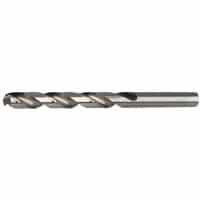 HSS Metal Bit DIN 338 SCID Length 65 mm Diameter 3.2 mm Sold by 2
- Flat bits
As the name suggests, this type of bit has a flat bit with a width of over 1 cm for drilling large holes.
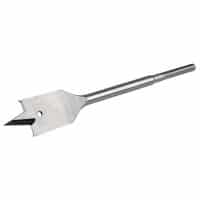 SCID Flat Wood Bit 150 mm Diameter 12 mm
- Chamfering or milling bit
The tip of this drill is cone-shaped, often with a scale profile. It is often intended to refine the edges of holes.
- Auger bit
This is also a conical drill with multiple planes.
- Glass bit
It consists of a head with a spearhead profile, particularly designed to avoid breaking on glass materials, such as ceramics.
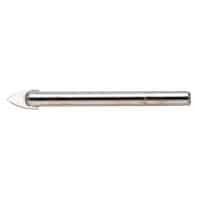 SCID Glass Bit 68 mm Length 6 mm Diameter
- Hole saw
The cylindrical drilling head is equipped with saw teeth on the edges to allow for very large holes (mainly wood) up to 15 cm in diameter.
The shank
Also called “tail” in slang, this piece is used to secure the drill to the drilling wing to stabilize it during work. 3 sets of fittings are available on the market, with size variations to fit the spindle.
- Standard shank
This is the smooth shank drill that can fit all types of spindles (keyed or self-locking). Depending on the model and to fit the drill, the diameter of the shank can differ: smaller or larger than the body.
- Hexagonal shank
Often hexagonal, it is specially designed for hexagonal or ring bits. This configuration implies greater torsional strength than the conventional shank.
- Specific shanks
These are the different classes of SDS (Special Direct System) that are distinguished by longitudinal grooves on the shank. This configuration allows for an even stronger attachment to the spindle. This mounting model is specially designed for hammer drills. SDS fittings are available in 4 levels: Standard, Plus, Max, and Top, for use depending on the power of the device.
Choosing your drill based on the material of construction
A good number of materials are selected respectively for the production of any drill. These are of course metals, chosen not only for their strength and power but also considering their ability to avoid breaking on the material to be drilled (controlled power).
- Steel
This is the standard material that can be used in any situation, but it is more suitable for drilling soft materials such as wood. And it is the minimalist existing in all drills.
- Carbon steel
Stronger notch than the standard steel bit.
- HSS (High-Speed Steel)
More resistant to heat and wear than the two previous alloys, HSS is used in intensive mode and on all types of materials. The HSS tip is also available in certain models depending on the degree of efficiency: standard HSS, HSS-R rolled steel, and HSS-G sharp.
- Tungsten carbide
This metal is used solely to make the cutting body of the drill, knowing that it is not particularly powerful and strong. But it effectively resists wear.
- Titanium
This metal is generally used only as a coating to make steel as robust as possible, very resistant to wear, friction, and heat, and thus for optimal durability.
- Cobalt
The cobalt steel alloy gives the drill high wear resistance and good heat dissipation.
The following table shows the quality of the different treated metals and alloys used in the composition of the most commonly used bits of 1 cm diameter.
Bit Hardness Heat resistance Duration HSS 900 N/Nm² <600°C Average Steel Titanium 1000N/Nm² <1000°C Good Steel and tungsten carbide. Up to 1100 N/Nm² >1000°C Good Steel Cobalt Up to 1200 N/Nm² <1000°C Very good Solid carbide Up to 1500 N/Nm² <
900°C Exceptional
Which drill for which purpose?
From these “Formologica” differentiations of bits, we can distinguish models suited for different uses. In general, manufacturers often indicate the destination of their products.
- Wood bit
For drilling wood, the high precision character of the drill is important, knowing that despite varying hardness levels, woods all have the property of being easy to drill. Power is then relegated to the background. Regardless of the shank, any flat bit or small spiral bit is often preferred for small woods and spiral bits for thick wood.
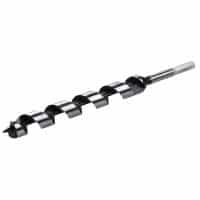 SCID Spiral Wood Bit 230 mm Diameter 6 mm SCID – Flat Wood Bit – Length 150 mm – Diameter 12 mm
 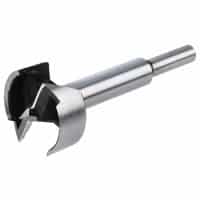 Forstner SCID Bit 92 mm Diameter 12 mm
Here are some indications on the main types of wood bits and their destination:
Wood bit Uses Fast spiral tip
- Framing drilling
- Deep drilling
- Drilling large holes
3-point bit
- High precision drilling
- Carpentry
Flat bit
- Drilling large holes
- Rough drilling
Hinge drill
- Flat bottom drilling
- Carpentry and joinery
Conical tip
- Finishing
- Metal bit
This is mainly hexagonal spirals or SDS, with a flat head (up to 140°) for working with hard metals, or less steep angles for softer metals. And the choice should also focus on hard production materials (the choice of individual steel is not recommended), referring to the manufacturer’s information.
HSS Cobalt Bit SCID Steel Length 65 mm Diameter 3.2 mm 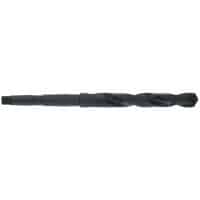 HSS Steel Bit, SCID No. 3, Length 286 mm, Diameter 26 mm
Here is a small summary table of the main metal bits and their uses:
Metal bit Uses HSS tip On soft metals, irons, and untreated steels Cobalt steel drill tip On hard and treated steels, stainless steels Titanium steel bit
Hard and treated steels
- Bricks, stones, and concrete bits
Of course, the size of the bit matters just as much as its robustness. However, the choice of drill is also given the nature of the construction materials. The unsharpened spiral bit is essential to ensure good dust removal.
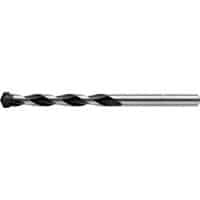 Pro SCID Concrete Bit 400 mm Length 8 mm Diameter
 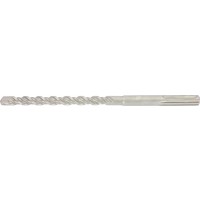 SDS-Max Concrete Bit 340 mm Diameter 12 mm
Concrete drill Uses Smooth handle drill
- Normal mode
- Drilling softer materials such as brick, plaster
FDS drill
- Percussion mode
- Drilling harder elements such as granite concrete
Tag : bit for drilling iron