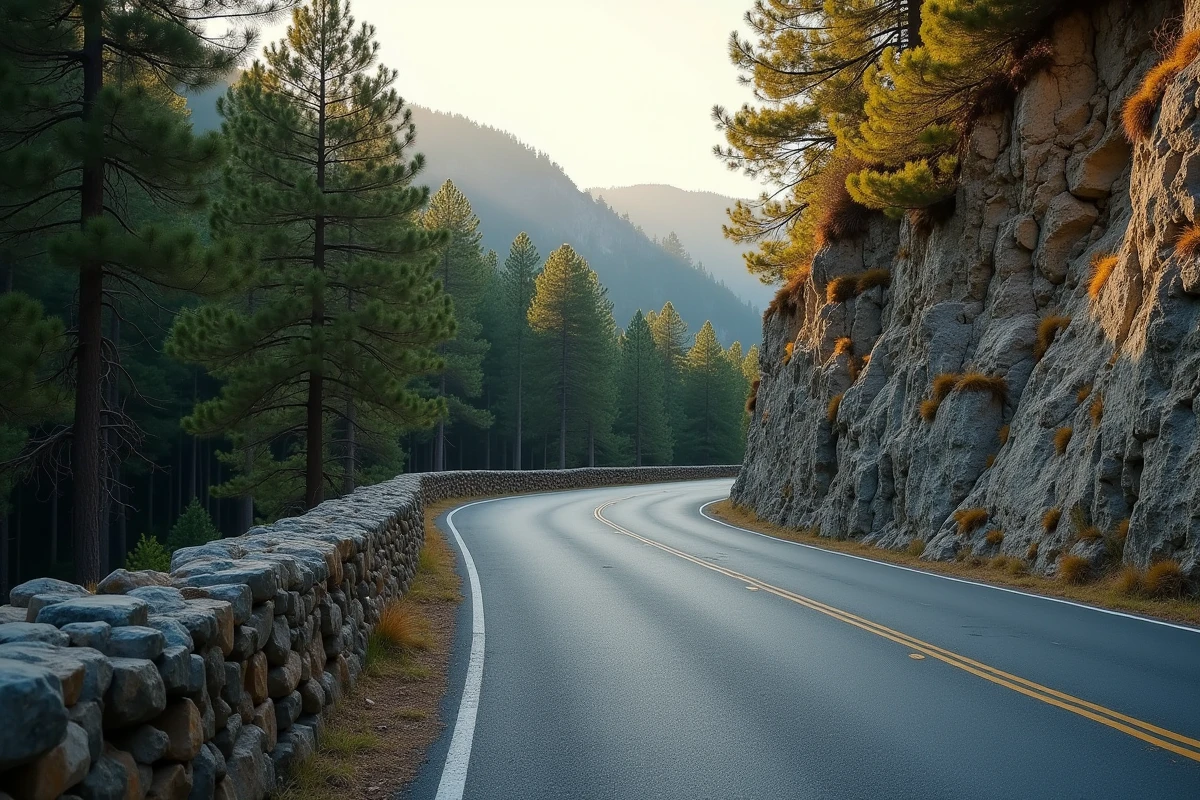
The N-260 crosses the Spanish Pyrenees from east to west, from the French border near Portbou to the outskirts of Navarre. Built in the 1980s, this national road winds through narrow valleys, mountain passes, and villages where time seems to slow down. Its route, often narrow and winding, attracts both motorcyclists and drivers seeking an alternative to the coastal highways.
However, the road remains relatively unknown to the French-speaking public, overshadowed by coastal routes to Barcelona or the Costa Brava. It is precisely this relative anonymity that adds to its appeal.
Network Coverage and Safety on the N-260 in the Mountains
Typical content about this road often overlooks a key point that conditions the entire experience: mobile connectivity is very uneven along the route. Between Cerdagne and the Val d’Aran, several sections pass through gorges and dense forests where the signal disappears for long minutes, sometimes longer.
For anyone relying on smartphone GPS, this loss of signal can turn a missed turn into a lengthy detour. Recent field reports suggest favoring Movistar or a virtual operator using its network to maximize reception in the most isolated sections. An offline GPS (app with pre-downloaded maps) remains the most reliable solution.
The lack of network also raises the issue of emergency calls. On certain sections, SOS posts are spaced several kilometers apart. Traveling with a companion or informing someone of your precise itinerary is not an excess of caution; it is a logical precaution when venturing onto a particularly deserted route during the week.
Those who want to delve deeper into the route and its limitations will find useful details on the N 260 in Spain with Partir Voyager, especially regarding the more challenging sections.
Recent Climate Risks Along the N-260
Since 2022, episodes of early heat and drought in northern Spain have significantly increased the risk of wildfires, including in late spring. This phenomenon now affects the inland and mid-mountain areas that the N-260 traverses in Catalonia and Aragon.
Occasional road or access path closures to viewpoints and natural parks have been reported during these episodes. Local restrictions may also prohibit campfires and certain outdoor activities without notice. Checking the fire bulletins from the Generalitat de Catalunya or the Aragon government before setting off is no longer optional for a summer road trip.
In contrast, spring (April-May) and autumn (September-October) offer more favorable conditions. Vegetation is greener, temperatures are bearable in a car without air conditioning, and traffic is significantly lower than in July-August.
Motorcycle and Cyclist Traffic on the Pyrenean Sections
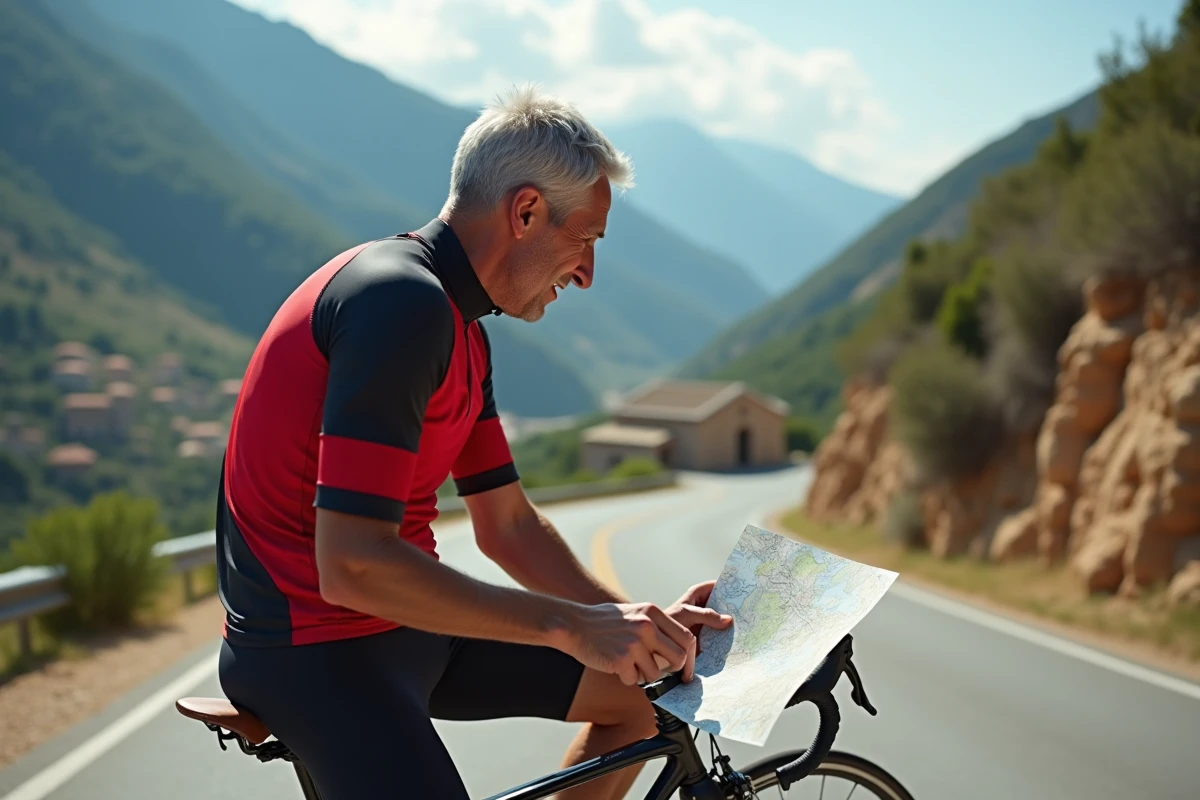
The N-260 has gained popularity in the motorcycle and cycling communities in recent years. Roadbooks published after 2023 report a rise in traffic on certain popular sections, particularly between Seu d’Urgell and the Viella tunnel. This increased pressure has concrete consequences.
On sunny weekends, the most winding sections see groups of motorcyclists riding at very different speeds, road cyclists, and local drivers crossing paths. Overtaking on narrow roads, with visibility sometimes reduced by hairpin turns, multiplies risky situations.
For a driver, caution in blind curves is not just generic advice. Field reports vary on the exact extent of the phenomenon depending on the seasons, but the upward trend in traffic seems established. Riding during the week radically changes the experience.
Some Practical Precautions for the Road
- Check the condition of brakes and tires before tackling such a winding route, especially if the vehicle is a rental picked up in the plains
- Bring water and food for sections where villages are spaced several dozen kilometers apart
- Download offline maps of the entire route before leaving an area with network coverage
- Monitor mountain weather (sudden storms in summer, morning fog in spring) via an app checked the day before
Landscapes and Villages Between Cerdagne and Aragon
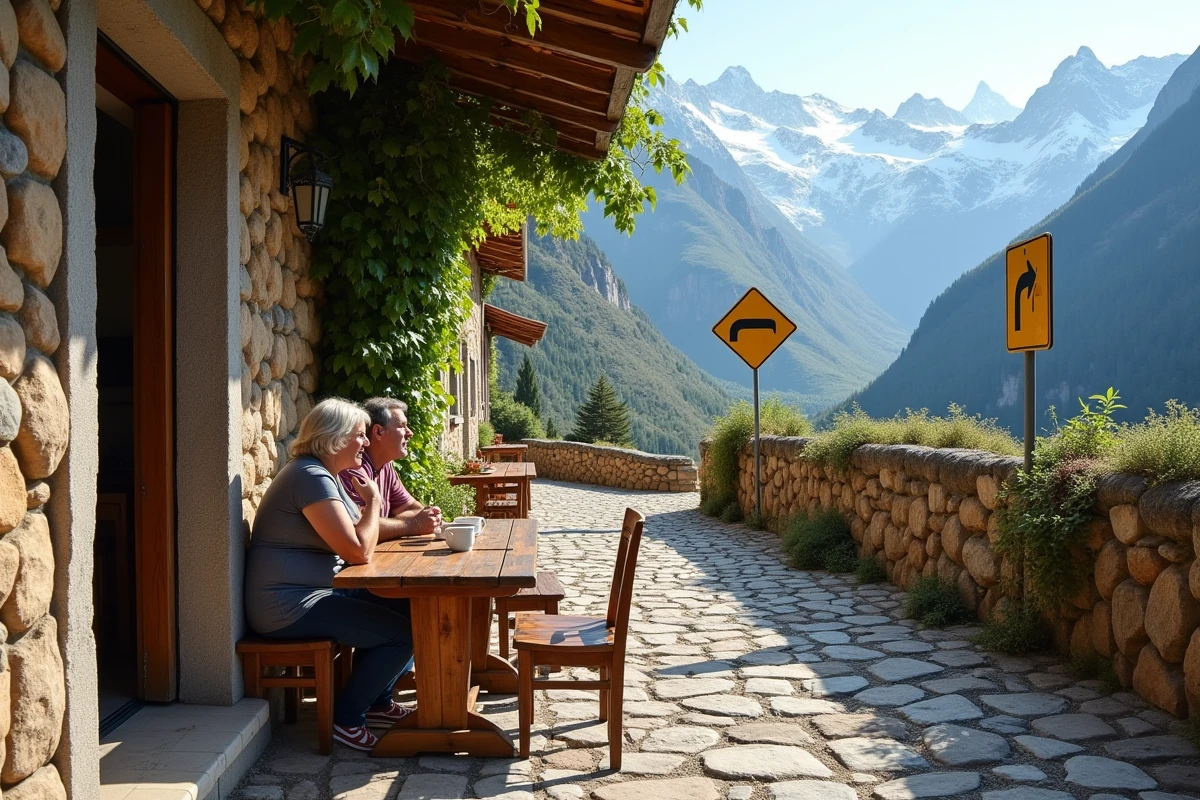
The route of the N-260 crosses very different geological and climatic areas over a relatively short distance. On the eastern side, Cerdagne offers an open, bright high plateau with meadows and stone villages. The contrast with the wooded gorges of Pallars, just a few dozen kilometers further west, is striking.
After Seu d’Urgell, the road plunges into narrower valleys. Villages like Sort or Pont de Suert retain mountain architecture largely untouched by mass tourism. Here, you will find local shops, bars with terraces overlooking the river, and an atmosphere that reminds you that this part of the Pyrenees remains primarily an inhabited territory, not just a backdrop.
Further west, towards Aragon, the landscape gradually dries out. Pine forests give way to more arid rock formations. This change of scenery, sometimes occurring over just a few kilometers, gives the N-260 a visual diversity that few European mountain roads can claim.
Must-See Stops
- Seu d’Urgell, for its Romanesque cathedral and market, is a natural halfway stopping point
- The Collegats gorges, between Sort and La Pobla de Segur, where limestone cliffs frame the road for several kilometers
- The Aínsa area in Aragon, a perched medieval village with views of the foothills of Monte Perdido
The N-260 is more than just a beautiful mountain road. Its route imposes real constraints (mobile network, weather, increasing traffic) that deserve to be anticipated. Travelers who take the time to prepare for these aspects enjoy an itinerary where each section tells a different geography, far from the congested routes of the Mediterranean coast.