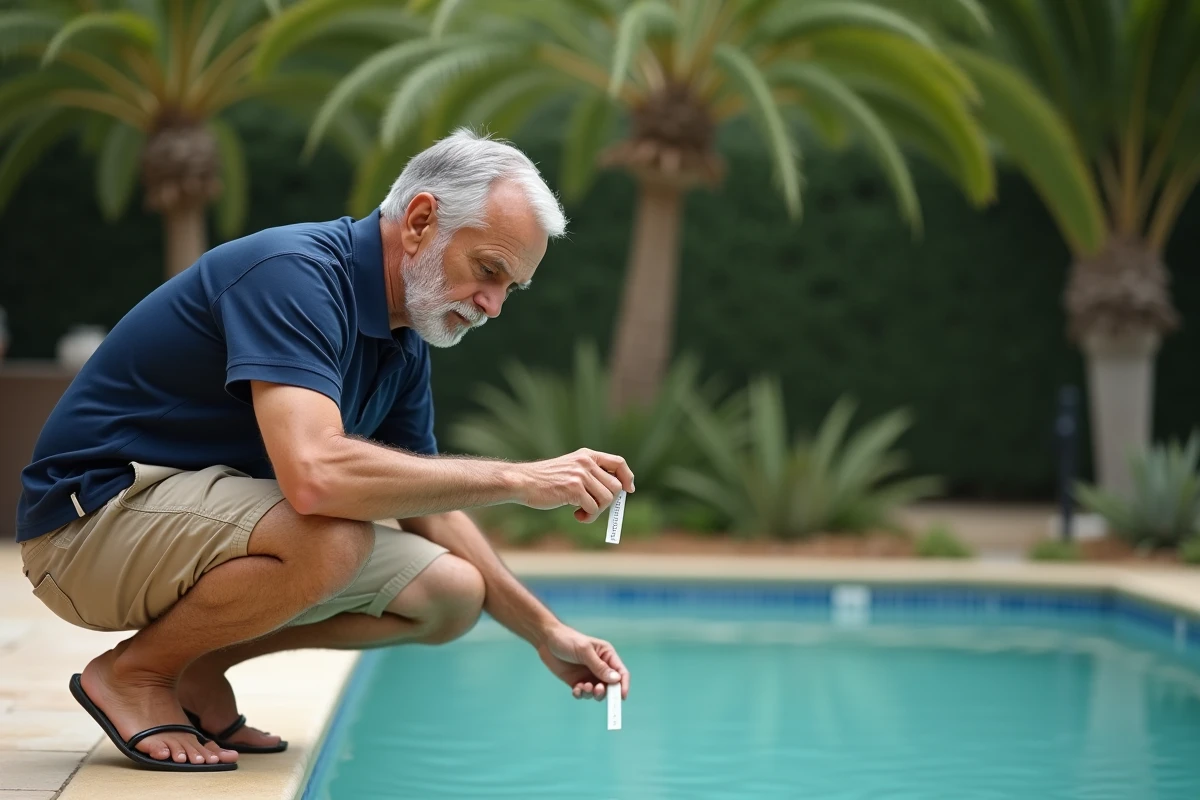
Your pool water is becoming cloudy, the pH refuses to stabilize despite your corrections, and the walls of the pool show whitish deposits. These signs often point to an excessively high alkalinity. The TAC (total alkalinity) acts as a chemical buffer: when it rises above the recommended values, it locks the pH in a high position and makes any adjustments ineffective.
Before pouring an acid product randomly, you need to understand why the TAC is rising and which methods work according to your type of pool. Saltwater pools, ecological pools, and traditional chlorine pools do not react the same way.
Saltwater Pools and High TAC: A Rarely Explained Link
Are you using a salt electrolyzer to disinfect your pool? This choice has a direct side effect on alkalinity. The salt electrolysis raises the TAC faster than a traditional chlorine treatment. The process continuously produces caustic soda (sodium hydroxide), which pushes alkalinity up, especially during periods of high summer usage.
To find solutions if pool alkalinity is too high, you first need to identify if your treatment system is contributing to the problem. With an electrolyzer, weekly TAC monitoring during hot periods becomes necessary, whereas a manual chlorine pool can manage with a measurement every two weeks.
Evaporation exacerbates the phenomenon. When water evaporates due to high heat, minerals remain and concentrate. The TAC mechanically rises. Using a thermal cover when the pool is not in use limits this concentration and reduces the frequency of corrections.
Correcting TAC with Sodium Bisulfate: Dosage and Method
The classic reflex to lower alkalinity is to add an acid product to the pool. Since January 2025, undiluted hydrochloric acids have been gradually banned in consumer products in Europe for environmental safety reasons. Sodium bisulfate has become the main alternative for individuals.
Here is the concrete method for effective correction:
- Measure the TAC with strips or a photometer before any intervention, to know your exact starting point
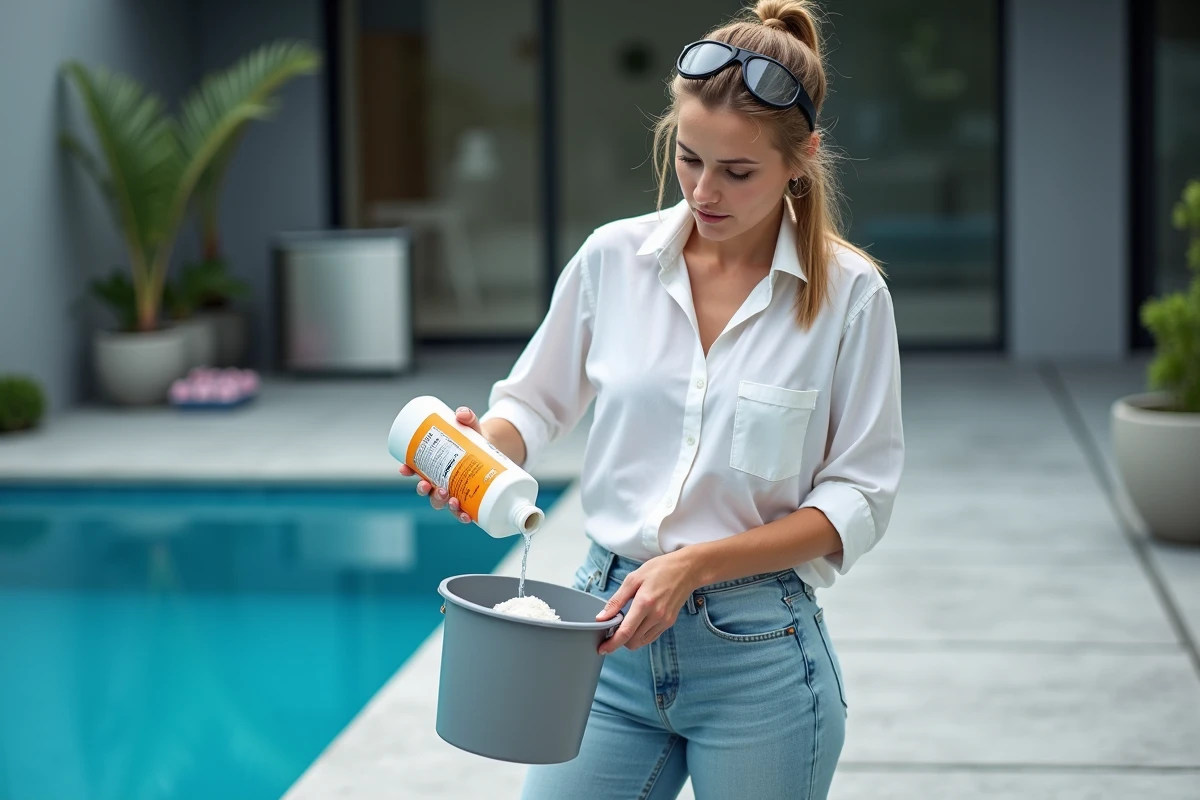
- Dilute the sodium bisulfate in a bucket of warm water before slowly pouring it in front of a return jet, with filtration running
- Wait at least six hours between two additions, then retest the TAC before adding more
- Aim for a stable TAC within the recommended values for your type of treatment (saltwater pools tolerate a slightly different range than chlorine pools)
Never correct TAC and pH at the same time. First lower the alkalinity, wait for the value to stabilize, then adjust the pH if necessary. Doing both simultaneously muddles the measurements and often leads to overdosing.
Why TAC Rises After Correction
A one-time correction is not always sufficient. If your fill water is naturally hard, every water addition raises alkalinity. In this case, test the TAC of your tap water. If it already exceeds the target value, you will correct in an endless loop as long as the source remains the same.
Lowering TAC Without Chemistry: Intensive Pool Aeration
Have you ever noticed bubbles on the surface when your return jets are pointed upwards? This agitation causes a gas exchange: the CO2 dissolved in the water escapes into the air. However, the degassing of CO2 naturally lowers alkalinity.
Feedback from installers shows that directing the jets towards the surface and running filtration continuously for 48 hours can significantly reduce TAC, without any chemical product. If you have a waterfall, built-in jacuzzi, or water jets, activate them: anything that creates surface turbulence accelerates degassing.
This method has a clear limit. Aeration does not work on covered or enclosed pools, as the released CO2 remains trapped in the ambient air and redissolves in the water. For the technique to be effective, the pool must be exposed to open air.
Ecological Pools Without Chemistry: Adapting TAC Correction
Pools treated with UV filtration, osmosis water, or natural lagooning pose a specific problem. Adding an acid, even a mild one like sodium bisulfate, disrupts the biological balance of these systems. Beneficial bacteria in biological filters do not tolerate sudden pH variations caused by acid addition well.
For these configurations, aeration remains the primary option for correcting TAC. It acts slowly but does not destroy the bacterial flora. If the pool operates with osmosis water, the TAC is generally very low at the source. High alkalinity in this context often signals an external problem: runoff from hard water, rises from a chalky soil, or degradation of the pool’s masonry materials.
Identify the Cause Before Correcting
In an ecological pool, correcting TAC without seeking the source is like emptying a boat that is taking on water without plugging the leak. Check the pool’s watertightness, the composition of the fill around the pool, and the quality of the make-up water. A simple hardness test on the tap water often guides the diagnosis.
TAC Monitoring Frequency According to Season and Treatment
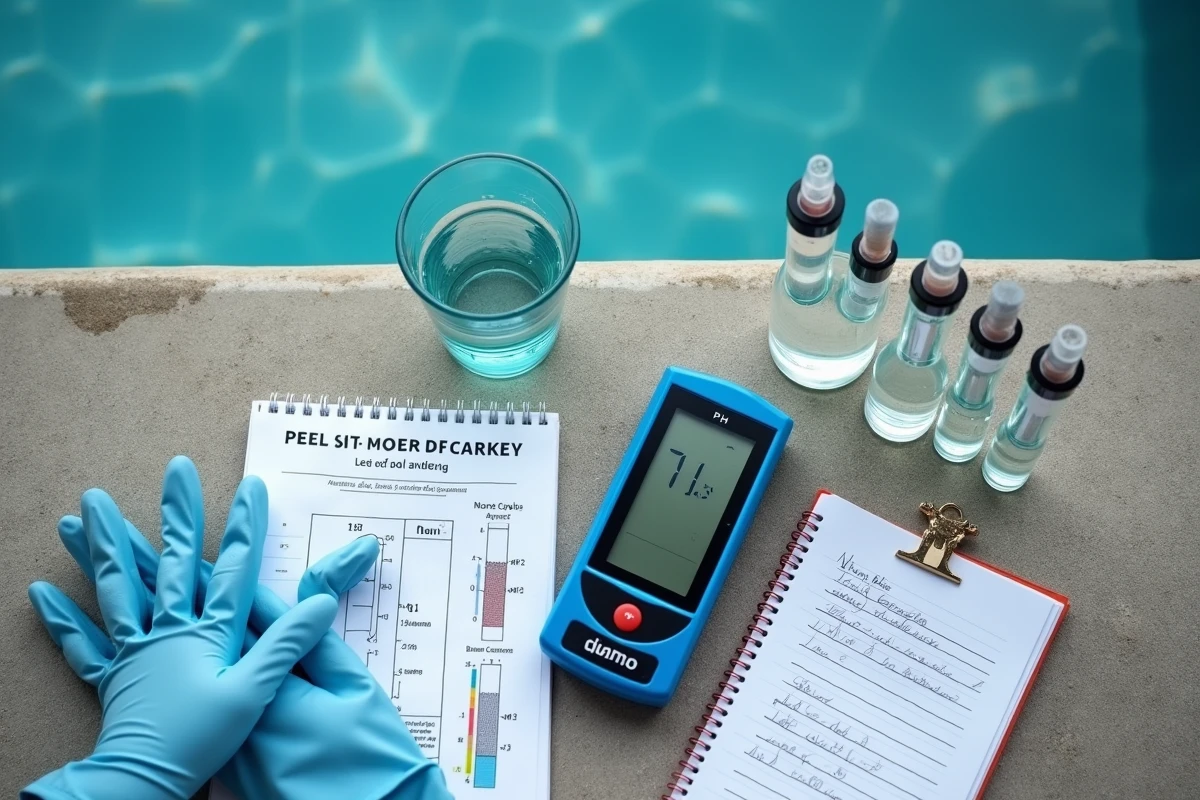
TAC is not measured at the same frequency throughout the year. In winter, with a lightly used pool, a monthly test is sufficient. In summer, the frequency depends on the type of treatment.
- Saltwater pool: weekly TAC monitoring between June and September, due to the continuous production of soda by the electrolyzer
- Manual chlorine pool: check every ten to fifteen days during the season, except after a significant water addition (retest within 24 hours)
- Ecological or chemical-free pool: bi-monthly check, with an additional test after each heavy rain episode that dilutes or alters the balance
A stable TAC also protects the effectiveness of chlorine and other disinfectants. When alkalinity drifts, pH follows, and a pH that is too high reduces the disinfecting power of chlorine. TAC is not a secondary parameter: it is the foundation on which the complete balance of your water rests.
Keeping a regular eye on this parameter, adapting the correction method to your pool, and addressing the cause rather than the symptom is what makes the difference between clear water and a swimming season spent chasing corrective treatments.