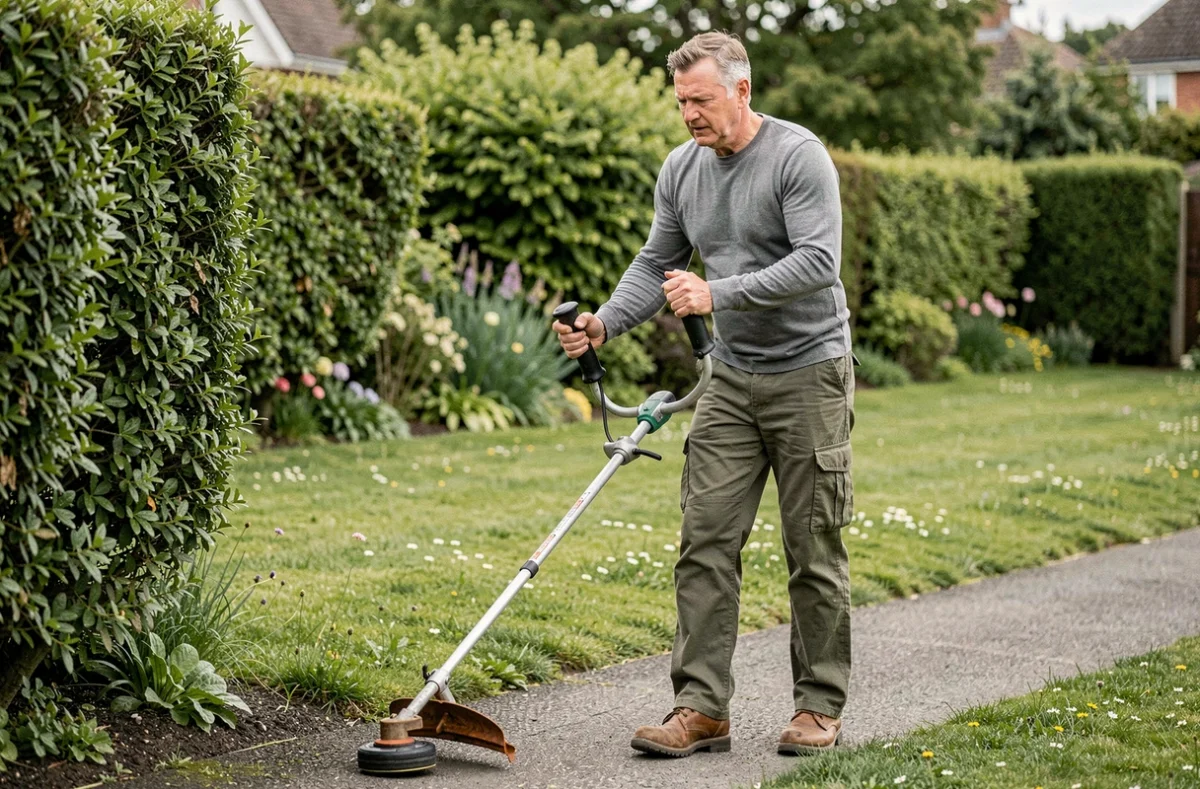
A freshly mowed lawn with edges overrun by brambles is the kind of scene that encourages one to invest in a brush cutter. The choice of the right model depends less on the brand than on your terrain, the vegetation to be cut, and the frequency of use. Here’s how to make sense of choosing a brush cutter suitable for your garden.
Battery or gas: the engine that changes the way you work
You may have noticed that some neighbors brush cut almost silently, while others wake up the neighborhood? The difference lies in the type of engine.
A gas engine runs on gasoline (usually a two-stroke mix). It offers nearly unlimited autonomy as long as the tank is full, and its power remains constant even in dense vegetation. This is the logical choice for large plots or wastelands where brambles and shrubs resist a standard line.
The battery brush cutter, on the other hand, appeals with its low noise level and the absence of a mix to prepare. However, the actual autonomy directly depends on what you are cutting: dense vegetation significantly reduces working time per charge. If your garden is a few hundred square meters with tall grass but no thick underbrush, a battery is more than sufficient.
A often overlooked point: the entry cost of a battery machine includes the battery and charger, which represent a significant part of the price. The economic interest increases if you own other compatible tools from the same platform (hedge trimmer, blower). Check the compatibility between devices before purchasing, as not all batteries from the same manufacturer are interchangeable across ranges. Several specialized catalogs, such as the one offered by debroussailleuse-warrior.com, allow you to compare platforms and their accessories.
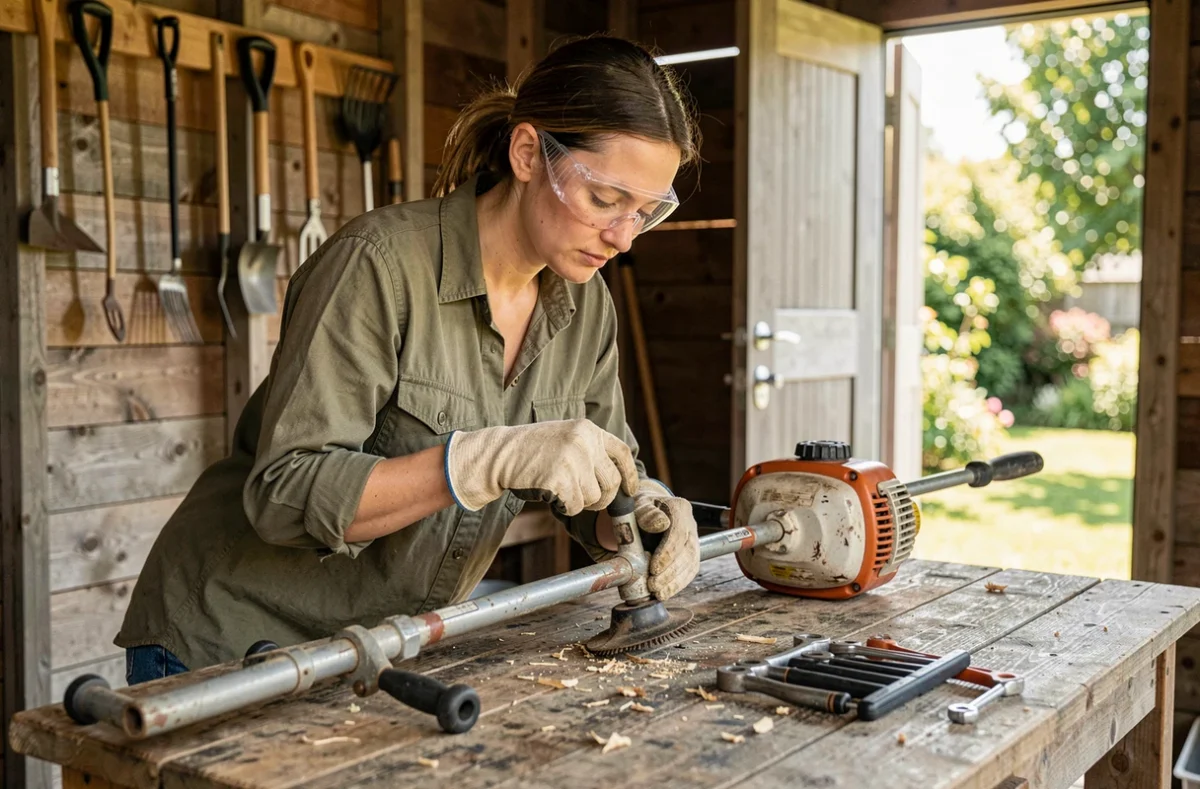
Cutting system: line, blade, or disc depending on the vegetation
The engine powers the machine, but it’s the cutting element that does the work. Choosing the wrong accessory is like using a butter knife on wood.
- Nylon line: suitable for tall grasses and edge finishing. It wears out quickly in woody vegetation, but it is less dangerous in case of contact with a wall or fence.
- Three or four-tooth blade: designed for brush, brambles, and small shrubs. It cuts cleanly but requires a relatively clear terrain free of obstacles (stones, posts).
- Brush disc: reserved for heavy work, such as clearing undergrowth or cutting young trunks. Heavier, it requires a powerful machine and a suitable harness.
Most brush cutters accept several types of cutting elements. Before purchasing, check that the cutting head is compatible with the accessories you will need throughout the seasons.
Weight, harness, and handle shape: ergonomics determine working duration
A brush cutter that is too heavy or poorly balanced can tire the arms and back in just a few minutes. Why does this criterion matter as much as power?
Because garden maintenance is a long-term task. A lightweight machine used regularly yields better results than a powerful machine that gets postponed due to fatigue. Two elements make a difference on a daily basis:
The carrying harness. Entry-level models offer a simple shoulder strap. For sessions longer than fifteen minutes, a double harness that distributes weight across both shoulders and the hips radically changes comfort. Some backpack brush cutters go further by placing the engine directly on the back, freeing the arms.
The handle shape. A “D” handle is suitable for precision work (edges, around flower beds). A “bike” handle (two symmetrical grips) offers better control for wide sweeps over a large area. This choice directly depends on the layout of your garden.
Regular maintenance and local regulations: two often overlooked angles
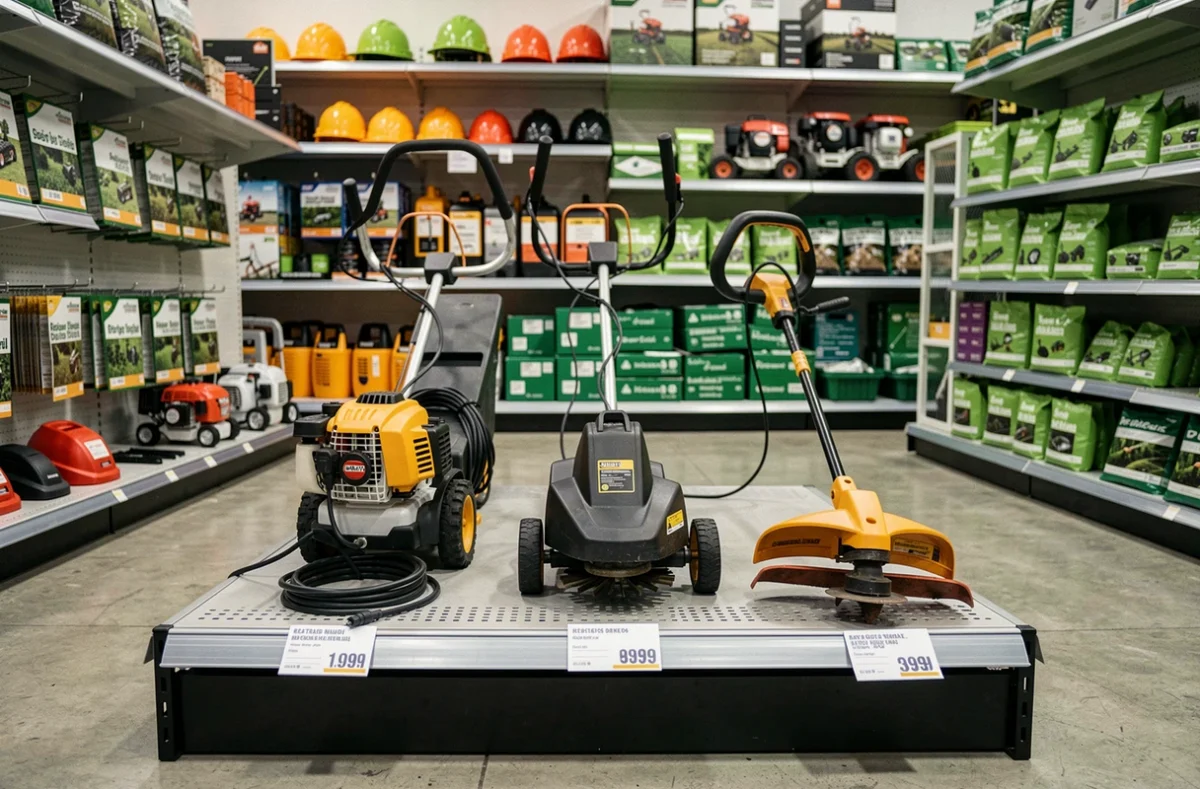
Maintaining a brush cutter determines its longevity. On a gas model, the air filter, spark plug, and carburetor require regular attention. A clogged filter reduces power and increases consumption. On a battery machine, mechanical maintenance is limited to cleaning the cutting head and replacing the line or blade.
Store lithium-ion batteries at moderate temperatures and at half charge if you do not use them for several weeks. Storing at full charge or completely empty accelerates cell degradation.
Noise and neighbors: check local regulations
There is no single national schedule for motorized gardening work. Authorized time slots vary by municipality and prefecture. Even within a permitted time frame, repeated or deemed excessive noise can be classified as a disturbance to neighbors. Before choosing between gas and battery, check with your town hall, especially if you live in a densely populated residential area.
The right model of brush cutter is the one you will take out of the garage without hesitation. A sloped terrain with brambles calls for a gas model with a double harness and toothed blade. A modest-sized garden with borders to maintain will suffice with a battery machine equipped with nylon line. Start from your terrain, not from the technical sheet.